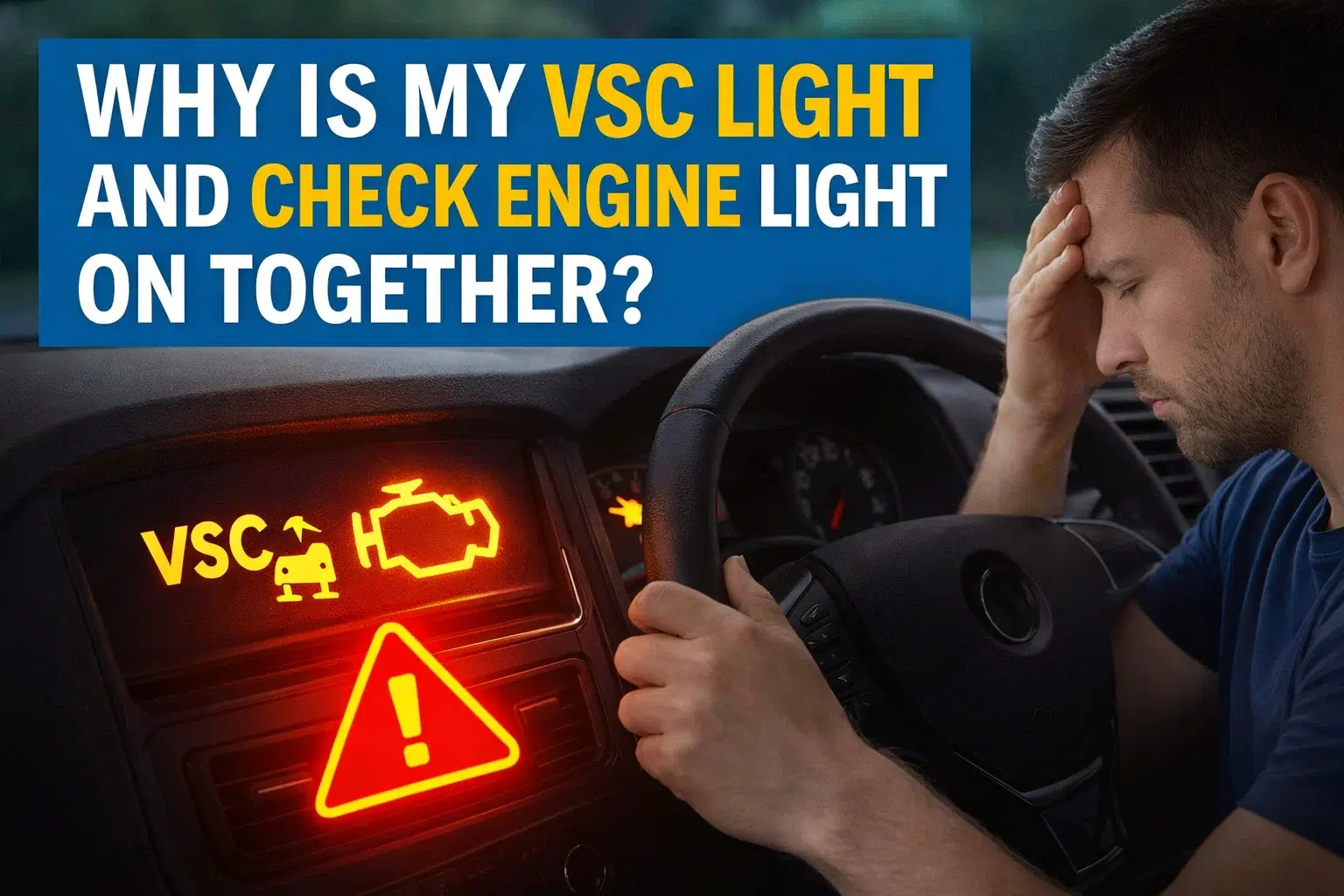
When the VSC light and check engine light turn on together, it usually means your vehicle’s stability control system and engine management system have detected a related fault which often involves sensors, braking components, electrical voltage, or shared control modules and the car may even disable safety features to protect itself.
Introduction
Modern vehicles rely heavily on electronic systems to keep drivers safe, improve handling, and reduce emissions. Dashboard warning lights are how your car communicates when something is not working as intended. Among the most confusing combinations for drivers is when the VSC light and check engine light come on together.
Seeing both lights illuminated can make you feel alarmed because it suggests more than a simple warning. In many cases, the vehicle is telling you that a fault affects both performance and stability, which is why timely diagnosis is important. While the issue may be minor, ignoring these warnings can lead to reduced traction, unsafe driving conditions, or costly repairs.
Understanding what these lights mean and why they appear together helps you make much more smarter decisions about safety, repairs, and whether it is safe to keep driving.
Key Takeaways
- The VSC light relates to your car’s stability and the traction systems
- The check engine light monitors engine and the emissions performance
- Both lights together usually indicate shared sensors or system faults
- Electrical issues, brake problems, or sensor failures are the most common triggers
- Ignoring the warnings can disable safety features and increase repair costs
Understanding the VSC (Vehicle Stability Control) Light
Many drivers ask, what does VSC mean on a car? VSC stands for Vehicle Stability Control, a system designed to help prevent skidding and loss of control during sudden maneuvers, slippery roads, or emergency braking.
What the VSC System Does
The VSC system continuously monitors:
- Steering wheel angle
- Wheel speed
- Vehicle direction vs driver input
If the system detects that the car is starting to slide or lose traction, it automatically:
- Applies braking to individual wheels
- Reduces engine power
- Helps keep the car on its intended path
This is why the vehicle stability control system Toyota uses is closely integrated with ABS and traction control.
In Toyota and Lexus models, you may see indicators such as:
- VSC light Toyota
- VSC TRAC light
- Vehicle stability control light on Toyota
Flashing vs Solid VSC Light
| VSC Light Behavior | Meaning |
| Flashing | System is actively correcting loss of traction |
| Solid | System fault or VSC is disabled |
A solid VSC warning light usually means the system has shut itself off due to a detected problem.
Common Causes of the VSC Light
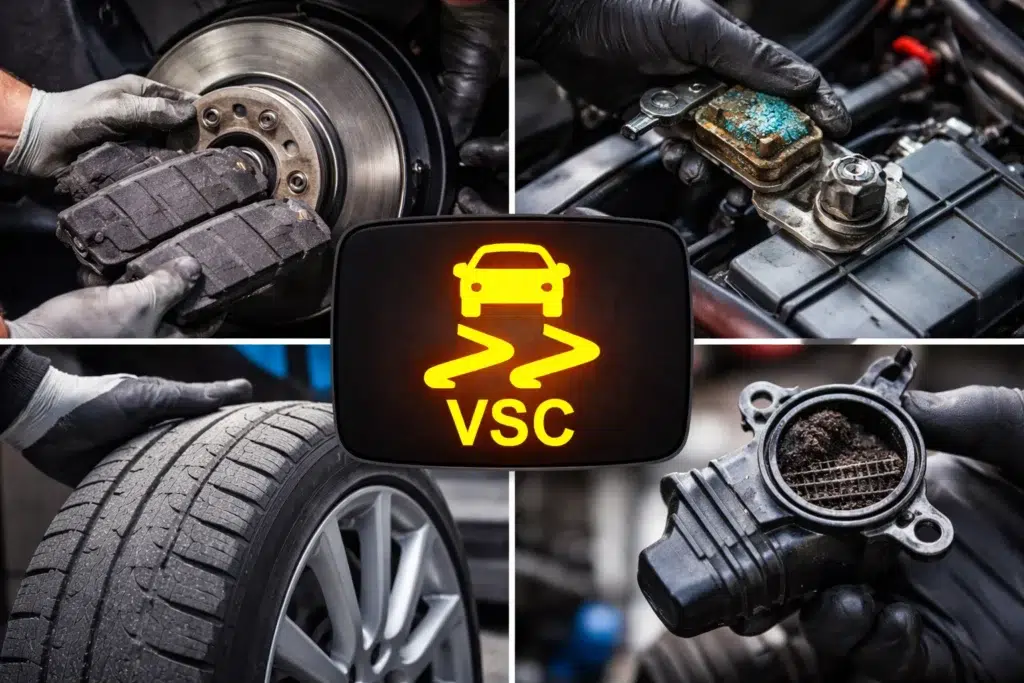
The VSC car light doesn’t always mean the system itself is broken. Often, it’s reacting to data it no longer trusts.
Faulty Wheel Speed Sensors
Wheel speed sensors measure how fast each wheel rotates. If one sensor sends incorrect data, the car stability control system may shut down entirely.
ABS System Issues
Because ABS and VSC work together, ABS faults can trigger:
- VSC light
- VSC off lightwe
- Vehicle stability control light
Low Brake Fluid Levels
Brake fluid pressure is critical for stability control. Low levels often due to worn brake pads or leaks can cause VSC off meaning conditions where the system disables itself.
Uneven or Worn Tires
Different tire diameters or tread wear can confuse wheel speed readings. This is why common tire wear issues can directly cause a VSC light on car even when nothing electronic is broken.
Steering Angle Sensor Problems
If the car can’t accurately tell where the steering wheel is pointed, it can’t calculate stability corrections correctly.
Understanding the Check Engine Light
The check engine light is one of the most misunderstood warnings on the dashboard. Drivers often wonder whether it’s safe to ignore, especially if the car still seems to drive normally.
Purpose of the Check Engine Light
The check engine light indicates the vehicle’s onboard diagnostics system has detected a fault related to:
- Engine performance
- Fuel delivery
- Emissions control
A solid light usually means the car can still be driven cautiously. A flashing light signals a serious issue, often an active misfire.
Solid vs Flashing Check Engine Light
| Light Status | Severity |
| Solid | Fault detected, reduced efficiency |
| Flashing | Immediate risk to engine or catalytic converter |
In some cases, the check engine light VSC combination appears because the engine fault forces the stability system to shut down.
Common Causes of the Check Engine Light
Oxygen Sensor Failure
A failing oxygen sensor disrupts the fuel mixture calculations and even controls the emission.
Faulty Spark Plugs or Ignition Coils
Misfires can trigger the check engine light and cause traction systems to deactivate for the complete safety.
Mass Air Flow (MAF) Sensor Problems
Incorrect airflow readings affect throttle response and engine output.
Loose or Damaged Gas Cap
Surprisingly the most common and one of the simplest fixes.
Vacuum Leaks or Emissions Faults
Leaks disrupt pressure balance and trigger fault codes.
Why Are Both the VSC Light and Check Engine Light On at the Same Time?
When drivers search why is my VSC light and check engine light on, the answer usually lies in how interconnected modern vehicle systems are.
Shared Sensors and Interconnected Systems
The stability system relies on accurate engine data. If the engine computer detects unreliable information, it may disable stability control as a precaution.
This interaction is similar to vehicle dynamic control (VDC) systems, where multiple safety modules depend on the same sensor inputs.
Faulty Wheel Speed or ABS Sensors
A single bad sensor can trigger:
- Check VSC system
- Check engine VSC
- VSC engine light
ECU or Control Module Communication Issues
The engine control unit acts as the vehicle’s central brain. Communication errors can cause multiple warning lights to appear simultaneously.
Electrical or Wiring Problems
Low voltage, corroded grounds, or damaged wiring harnesses often lead to false warnings. This is why checking car battery voltage is critical when multiple dashboard lights appear together.
Low Brake Fluid or Brake System Faults
Brake-related faults affect stability calculations and can cascade into engine-related warnings.
What Should You Do If Both Lights Are On?
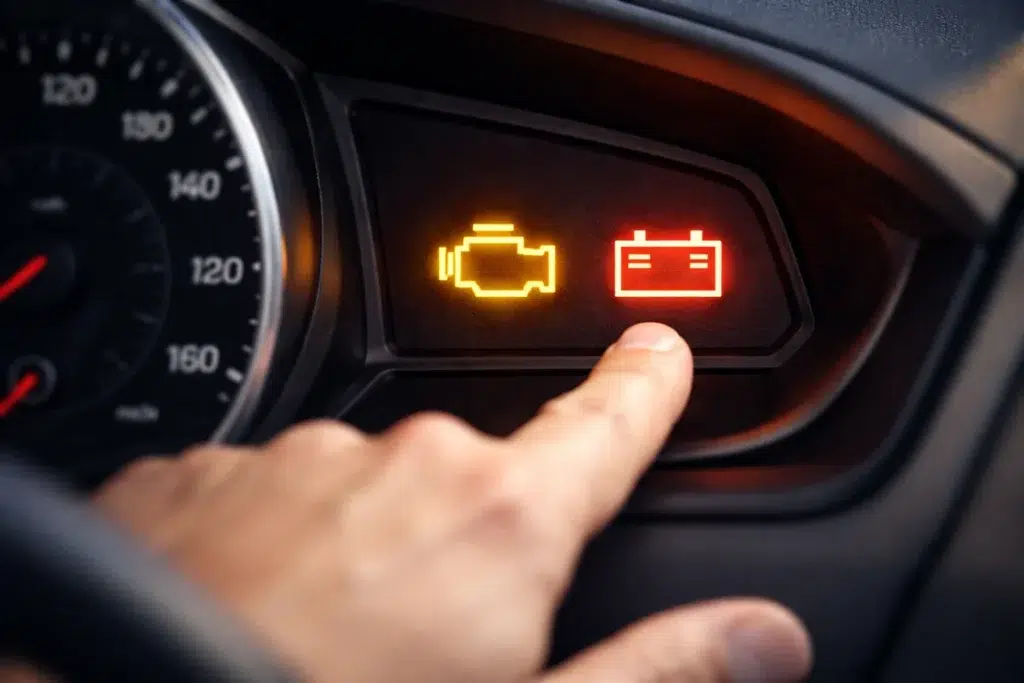
Initial Checks Vehicle Owners Can Do
Before panicking, check the basics:
- Is the gas cap tight?
- Are fluid levels normal?
- Are there visible leaks?
Checking Fluid Levels and Gas Cap
Low brake fluid is especially common and often overlooked.
Scanning the Vehicle for Diagnostic Trouble Codes
An OBD-II scan provides specific fault codes that clearly explains why the VSC check engine light is on. This step easily prevents unnecessary repairs.
When to Seek Professional Help
If warning lights starts operating or the vehicle drives differently, professional diagnostics are essential. Issues that cause car won’t accelerate when pressing the gas often indicate safety systems limiting power.
Is It Safe to Drive With Both Lights On?
The short answer: sometimes but cautiously.
Situations Where Short-Distance Driving May Be Possible
- No unusual noises
- No loss of braking
- No flashing warning lights
When Driving Should Be Avoided Completely
- Flashing check engine light
- Reduced braking response
- Stability control disabled in bad weather
Risks Related to Traction and Braking Loss
Without VSC, the car may skid a bit more easily during sudden turns or wet conditions.
What Happens If You Ignore the VSC and Check Engine Lights?
Ignoring warnings can lead to:
- Loss of traction control
- Reduced engine power
- Expensive repairs
- Failed emissions tests
In severe cases, the car may progress from warning lights to symptoms like car cranking but not starting, especially when electrical faults worsen.
How to Prevent VSC and Check Engine Light Issues
Regular Maintenance and Inspections
Routine inspections catch worn sensors and can lower the fluid levels early.
Brake and Tire Care
Consistent tire wear and proper inflation can easily prevent sensor confusion.
Early Diagnostic Scans
Scanning the car when the first light appears can stop a chain reaction of faults.
Using Quality Replacement Parts
Cheap sensors often fail early and cause repeat warning lights.
Frequently Asked Questions (FAQ)
What does it mean if both lights are on?
It generally indicates a shared fault affecting engine performance and even the vehicle stability, often related to sensors or the electrical systems.
Can low brake fluid trigger both lights?
Yes, low brake fluid can easily disable the stability system and can indirectly trigger the engine related signs and warnings.
Can I reset the lights by disconnecting the battery?
Disconnecting the battery may reset the lights temporarily, but this issue will return if the underlying problem remains there.
How much does it cost to fix these issues?
Costs vary widely, from a simple gas cap replacement to sensor or module repairs that may cost several hundred dollars.
Can weather or moisture cause warning lights?
Yes, Moisture intrusion can temporarily affect the sensors or wiring, especially in humid or wet conditions.
Conclusion
Whenever both the VSC light and check engine light come on together, it simply means that your vehicle’s safety and performance systems are affected. While some causes are minor, others can compromise traction, braking, and engine efficiency. Understanding the warning, checking simple causes, and acting quickly can help you prevent bigger problems and keeps your vehicle safe to drive.
Prompt diagnostics and regular maintenance are the most effective ways to keep these warning lights off and your car operating as intended.
Resources
Wikipedia: Electronic Stability Control Overview – A well detailed explanation of how ESC (similar to VSC) works and why stability systems activate to prevent loss of control.
Kelley Blue Book: Electronic Stability Control Explained – Consumer guide on how vehicle stability control (including systems like VSC) operates and what the dashboard light signifies.
MechanicBase: VSC and Check VSC System Light in Toyota and Lexus – Clear technical breakdown of what causes “Check VSC System” or VSC warning lights and their link to engine and traction problems
StartRescue: Explanation of Electronic Stability Control (ESC) Faults – Layperson overview of what stability control light faults mean and why you shouldn’t ignore them.
MechBasic: Vehicle Dynamic Control (VDC) Warning Light Guide – Explanation of the VDC system (comparable to VSC), why are the warning light turning on, and what it clearly indicates about the system stability.
Bettlink: Toyota VSC Light Guide – Technical analysis of Toyota’s VSC implementation, causes of the VSC light, and how it interacts with ABS and engine control systems.

I am Tushar Balchandani, founder of Car Info Expert and someone who has been working extensively in the car industry as a car expert for 15 years. My aim is to provide useful truthful and reliable information to the readers based on my real experiences and hands-on experience. From buying tips to maintenance guides, I help readers make confident car-related decisions.