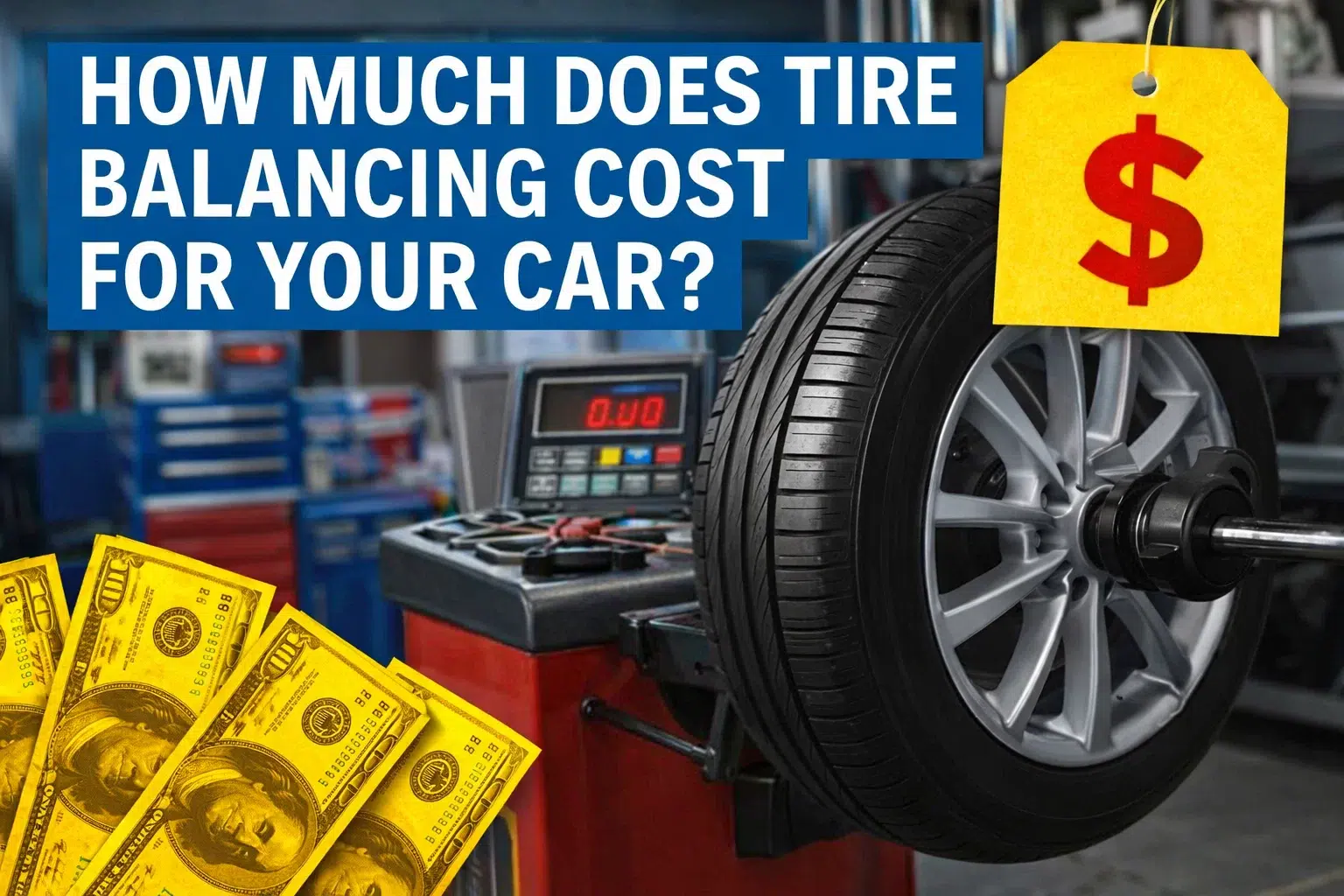
The average tire balancing cost ranges from $15 to $50 per tire depending on your vehicle type, wheel size, and service provider. Balancing all four tires usually costs between $60 and $200, while premium services such as high‑speed balancing or bundled rotational packages may cost more.
Introduction
Tire balancing is one of the most important yet often overlooked vehicle maintenance services. Properly balanced tires ensure that your wheels rotate evenly, providing a smooth ride, better handling, and improved safety. When tires are out of balance, you may experience steering wheel vibrations, uneven tread wear, increased strain on suspension components, and reduced fuel efficiency.
The tire balancing cost, wheel balancing service, and cost to rebalance tires can vary greatly depending on where you live, your vehicle’s make and model, whether it is a front or rear wheel, and the size of the wheels. Drivers typically pay from $15 to $50 per tire, so it is a relatively inexpensive service that avoids much more costly problems down the road.
What Is Tire Balancing? (Simple + Technical Explanation)
Tire balancing is the process of equalizing the weight distribution of a tire and wheel assembly. Even new tires are not perfectly uniform, and small weight differences can cause noticeable vibration once the wheel begins spinning.
From a technical standpoint, a computerized tire balancer spins the wheel at high speed to detect heavy spots. The technician then installs small balancing weights to offset these weight differences and ensure smooth rotation.
Tire Mounting vs Tire Balancing Mounting is the process of putting on your new tires, and balancing refers to making sure the weight brings about an even distribution. Even freshly mounted tires require balancing, which is why the tire mount and balance cost is usually bundled together.
How Much Does Tire Balancing Cost?
1. Average Price Per Tire
| Vehicle Type | Cost Per Tire | Cost for 4 Tires |
| Standard Sedan | $15–$25 | $60–$100 |
| SUV / Truck | $20–$35 | $80–$140 |
| Performance Cars | $30–$50 | $120–$200 |
| High‑Speed Balancing | $40–$70 | $160–$280 |
2. Wheel Balancing Price Breakdown
| Service Type | Average Cost |
| Standard balancing | $15–$25 per tire |
| Alloy wheel balancing | $20–$35 per tire |
| SUV / truck balancing | $25–$35 per tire |
| High‑speed tire balancing | $40–$70 per tire |
| Mount + balance package | $40–$80 per tire |
| Rotation + balance package | $50–$90 total |
This breakdown answers common questions like how much is wheel balancing, wheel balance cost, wheel balance price, balance tire cost, and the overall cost of tire balancing.
What Affects Tire Balancing Cost?
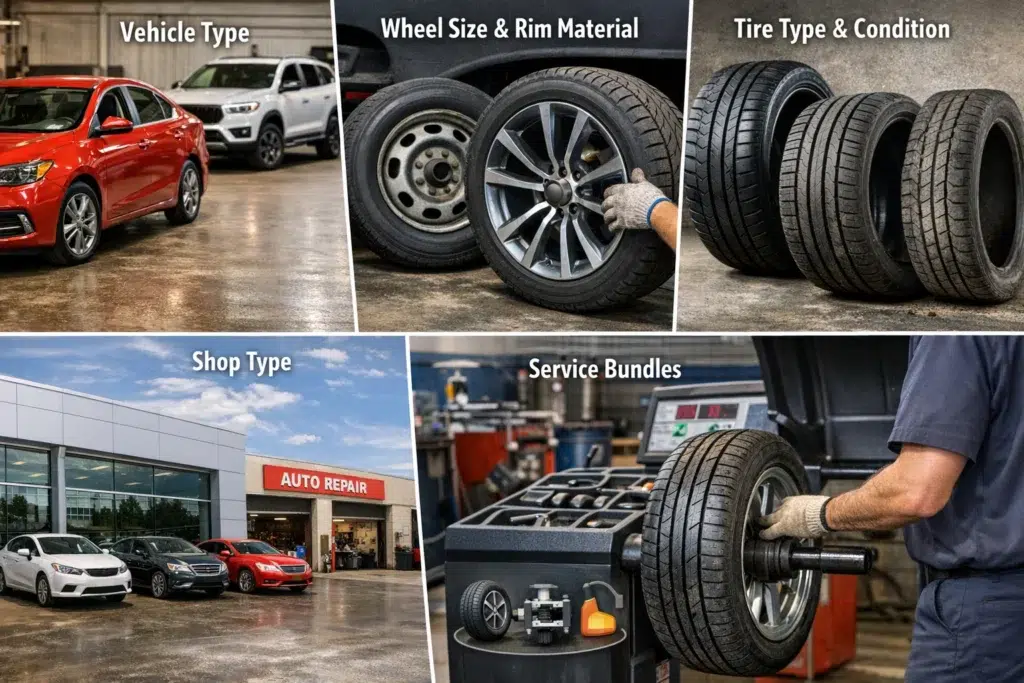
1. Vehicle Type
Smaller vehicles most probably have a lower rebalance tires cost, while SUVs, trucks, and luxury vehicles are more costly due to larger and heavy weight tires.
2. Wheel Size & Rim Material
Steel rims are easier to balance, whereas alloy and performance wheels require more precision, increasing the tyre balancing price.
3. Tire Type & Condition
In some cases, such as with low‑profile tires, run‑flat tires or if the tire is wearing unevenly, it will be more costly to balance because it needs extra adjustments.
4. Shop Type
Dealerships usually charge more than independent physical shops. Searching online for mount and balance tires near me often provides you with the more affordable local options.
5. Service Bundles
Bundling services such as rotation and balancing or alignment packages can rapidly reduce the overall wheel balancing charges.
Signs Your Tires Need Balancing
Common signs include:
- Steering wheel shaking at highway speeds
- Vibrations between 50 and 60 mph
- Uneven tread wear
- Humming or thumping noises
- Car pulling slightly to one side
- Reduced fuel economy
Ignoring these symptoms can shorten a tire’s life and increase repair costs. Many drivers only realize their tires rebalanced are overdue once vibration becomes noticeable.
How Often Should You Balance Tires?
Most experts recommend balancing your tires:
- Every 5,000–6,000 miles
- During every tire rotation
- After hitting potholes or curbs
- After installing new tires or wheels
Following these intervals keeps tire rotation balance cost predictable and helps maintain ride comfort.
Tire Balancing Cost vs Tire Alignment Cost
| Feature | Tire Balancing | Wheel Alignment |
| Fixes | Vibrations | Pulling & uneven angles |
| Average cost | Lower | Higher |
| Time required | Shorter | Longer |
While balancing corrects weight distribution, alignment adjusts wheel angles. Understanding wheel balancing and alignment charges helps avoid unnecessary services.
Tire Balancing vs Tire Rotation
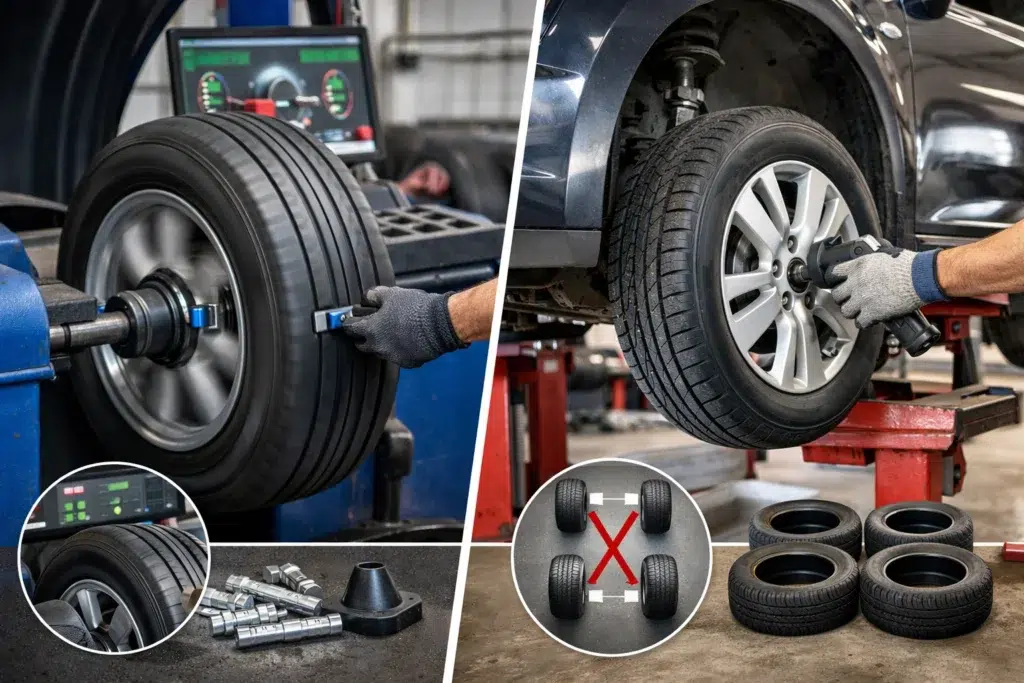
Tire rotation moves tires between wheel positions to promote even wear, while balancing corrects weight imbalance. Rotation alone cannot fix vibration issues.
Neglecting balancing during rotation can lead to uneven tread wear patterns commonly discussed in our guide on Common Tire Wear Problems. Combining both services ensures smoother driving and longer tire life.
The most common tire rotation and balance cost ranges from $50 to $90, which is very reasonable.
DIY Tire Balancing vs Professional Balancing
1. DIY Tire Balancing
DIY balancing kits exist, but they lack precision and often result in inaccurate weight placement. Improper DIY balancing can actually worsen vibration issues.
2. Professional Tire Balancing
Professional balancing is done with a high-tech computerized machine to guarantee accuracy. Many shops also offer free rebalancing, making the tire rebalance cost worthwhile.
Tire Mounting and Balancing: Total Cost Explained
1. Cost to Mount Tires and Balance Them
| Tire Type | Mount + Balance Cost |
| Standard car tire | $40–$80 per tire |
| SUV / truck tire | $50–$100 per tire |
| Performance tire | $60–$120 per tire |
Mounting always requires balancing, which is why these services are almost always bundled.
2. Cheapest Places to Get Tires Mounted and Balanced
Dealers charge more to change tires than independent shops and tire chains. Be aware that the quote for suspension‑related repairs like car front axle repair cost can go up when tires are incorrectly mounted or balanced.
Hunting for the cheapest place to get tires mounted and balanced can save money immediately, as well as the cost of repairs down the road.
High‑Speed Tire Balancing
High‑speed tire balancing is designed for performance vehicles and drivers who spend significant time at highway speeds. This service simulates real‑world driving conditions to eliminate vibration at higher speeds.
The high speed tire balancing cost usually ranges from $40–$70 per tire and is especially beneficial for luxury and sports cars.
How Long Does Tire Balancing Take?
- Standard balancing: 15–30 minutes per tire
- Balancing with rotation: 30–60 minutes total
Factors such as wheel size and tire condition can affect how long wheel balancing takes.
Is It Safe to Drive With Unbalanced Wheels?
Driving with unbalanced wheels increases tire wear, stresses suspension components, and reduces fuel efficiency. In some cases, vibration may be misinterpreted as engine trouble or even no acceleration when pressing gas, delaying the real fix.
If vibration worsens with speed, balancing should be done immediately.
Tips to Save Money on Tire Balancing
- Bundle balancing with rotation or alignment
- Avoid dealership pricing
- Take advantage of free balancing with new tires
- Maintain proper tire pressure
- Rotate tires regularly
- Look for seasonal discounts
When to See a Professional Mechanic
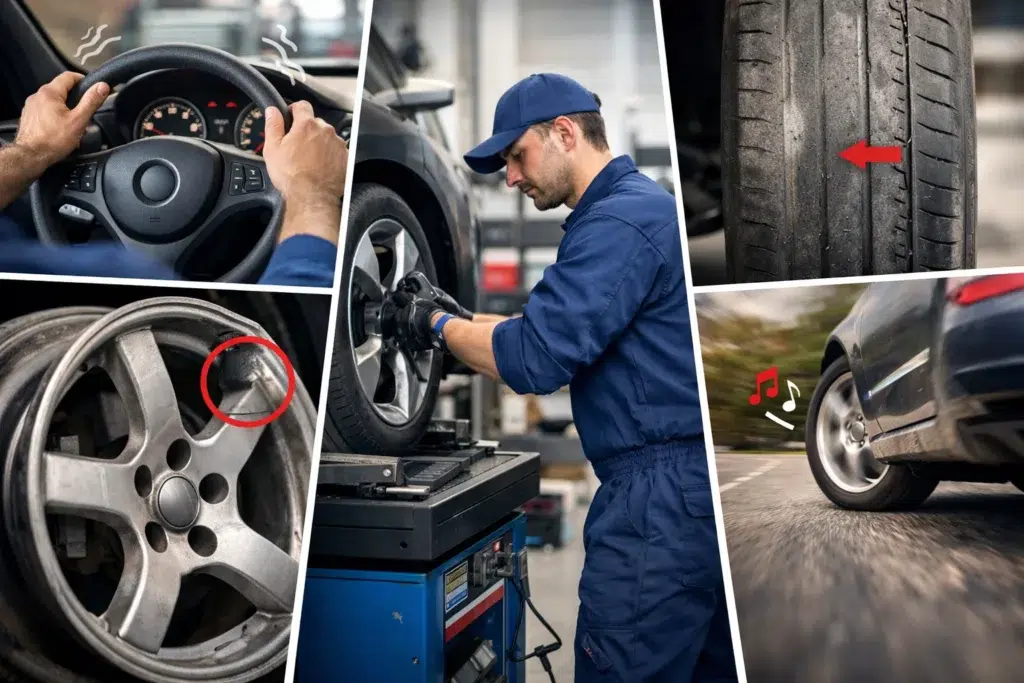
Seek professional help if:
- Vibrations persist after balancing
- Tire wear is severe
- Wheels or rims are bent
- Noise increases with speed
Knowing where can you get your tires balanced and choosing a reputable shop ensures accurate service.
Frequently Asked Questions
1. General Cost Questions
How much does tire balancing cost?
Tire balancing usually costs $15–$50 per tire, depending on vehicle type and shop.
How much does it cost to rebalance tires?
The cost to rebalance tires ranges from $15–$40 per tire.
What is the average cost to balance tires?
The average cost to balance tires is $20–$35 per tire.
How much is a tire balance for 4 tires?
Balancing four tires typically costs $60–$140.
Why do balancing prices vary shop to shop?
Prices vary due to labor rates, equipment quality, tire size, and your vehicle type.
2. Location & Shop-Based Questions
How much does wheel balancing cost near me?
Wheel balancing near you usually costs $15–$50 per tire.
How much does balancing cost at Discount Tire?
Discount Tire generally charges $15–$35 per tire, with free rebalancing on eligible purchases.
What is the price to mount and balance tires?
Mounting and balancing tires costs $40–$80 per tire on average.
What is the cheapest place to get tires mounted and balanced?
Independent tire shops are usually the cheapest for mounting and balancing tires.
Where can you get your tires balanced?
Tires can be balanced at tire shops, auto repair centers, dealerships, and chain stores.
3. Service-Specific Questions
How much does tire rotation and balance cost?
Tire rotation and balancing together usually costs $50–$90.
How long does wheel balancing take?
Wheel balancing takes 15–30 minutes per tire.
Do new tires need balancing?
Yes, all new tires must be balanced after installation.
Is wheel balancing included in tire installation?
Most tire installation packages include wheel balancing.
Do you need balancing after tire rotation?
Yes, balancing after rotation helps prevent vibration and uneven wear.
4. Technical Questions
What is high-speed tire balancing?
High-speed tire balancing simulates highway speeds to eliminate vibration at higher speeds.
Do all cars need road force or high-speed balancing?
No, it’s mainly needed for performance vehicles or persistent vibration problems.
Can unbalanced tires cause vibration?
Yes, unbalanced tires are a common cause of steering and seat vibration.
Can unbalanced tires damage suspension?
Yes, long-term driving with unbalanced tires can easily damage suspension components.
Can I drive with unbalanced tires?
Short-term driving is possible but it is very unsafe and not recommended.
5. DIY, Equipment & Maintenance
Can you balance tires yourself at home?
Balancing tires yourself at home is possible but is less accurate than professional balancing.
How much does a tire balancing machine cost?
Professional tire balancing machines cost $1,000–$5,000.
How often should you balance tires?
Tires should be balanced every 5,000–6,000 miles or during rotation.
Should you balance all 4 tires or just 2?
Balancing all four tires provides better ride quality and even wear.
Conclusion
Tire balancing is a low‑cost service that delivers long‑term benefits. Spending $15–$50 per tire can prevent uneven wear, suspension damage, and uncomfortable driving conditions.
Tire rotation along with balancing routinely saves you money in the long run as well as keeps your car safe and makes it perform better.
Resources
Wikipedia: Tire Maintenance – Overview of tire care practices includes balancing, rotation, inflation, and wear prevention.
AAA: Tire Safety and Maintenance – Consumer-focused detailed guide on maintaining your vehicle’s tires properly for safety, comfort, and a longer life.
Consumer Reports: Tire Buying & Maintenance Guide – Independent guidance on taking care of your tire, wear issues, and maintenance best practices.
HowStuffWorks: How Tires Work – Detailed Educational explanation of tire construction, wear patterns, and why proper balancing really matters a lot.
Firestone Complete Auto Care: What Is Tire Balancing? – Explains what tire balancing is, why imbalance usually happens, and how often to balance your tires.

I am Tushar Balchandani, founder of Car Info Expert and someone who has been working extensively in the car industry as a car expert for 15 years. My aim is to provide useful truthful and reliable information to the readers based on my real experiences and hands-on experience. From buying tips to maintenance guides, I help readers make confident car-related decisions.