
A standard car battery is 12 volts. A fully charged car battery voltage is usually between 12.6 and 12.8 volts when the engine is off, and the car battery voltage when running typically ranges from 13.7 to 14.7 volts.
That short answer alone satisfies most users asking how many volts is a car battery, but if you want to truly understand what should car battery voltage be, why it changes, and how low or high voltage affects your car, this complete guide covers everything in detail.
Quick Answer: How Many Volts Is a Car Battery?
So, how many volts is a car battery normally?
- Standard car battery voltage: 12 volts
- Fully charged car battery voltage (engine off): 12.6–12.8 volts
- Battery voltage when car is running: 13.7 to 14.7 volts
In simple terms, are car batteries 12V? Yes. Almost all petrol and diesel cars use a 12-volt car battery, and this has been the industry standard for decades.
If your readings fall outside this voltage range, it can signal charging problems, battery wear, or electrical issues.
What Does “Car Battery Voltage” Actually Mean?
Before diving deeper into the charts and numbers, it is very important to understand what car battery voltage really means.
What Is Battery Voltage?
Battery voltage refers to the electrical pressure that pushes current through electrical system of your car. When people ask what is the voltage in a car battery, they’re referring to how much electrical force the battery can deliver in a given moment.
Voltage vs Capacity (Ah)
Many car owners confuse voltage with capacity:
- Voltage of a car battery = electrical pressure (measured in volts)
- Capacity (Ah) = how long the battery can supply power
You can have a battery showing normal voltage for a car battery but still fail to start the car if its capacity has degraded.
Why Voltage Is Not Constant
The normal vehicle battery voltage constantly changes depending on:
- Whether the engine is on or off
- Electrical load (AC, lights, infotainment)
- Charging activity from the alternator
That’s why auto battery voltage readings must always be interpreted based on driving conditions.
Standard 12V Car Battery Explained (Most Petrol & Diesel Cars)

Why Cars Use a 12-Volt Battery
If you have ever wondered why is a car battery 12 volts, the answer lies in engineering efficiency and history.
A 12 volt battery provides enough power to:
- Start the engine
- Run electronic modules
- Power safety systems
Earlier vehicles were using 6V systems, but modern electrical demands made 12V automotive battery voltage the perfect balance between power and safety.
Six-Cell Battery Design
A standard car battery contains six lead-acid cells, each producing about 2.1 volts.
6 × 2.1V ≈ 12.6 volts fully charged
That’s why the voltage of a fully charged car battery is higher than 12 volts.
Normal Car Battery Voltage Chart (Very Important)
This table answers almost every question about normal voltage for car battery conditions.
| Car Battery Condition | Normal Voltage |
| Fully charged (engine off) | 12.6–12.8V |
| Healthy (engine off) | 12.4–12.6V |
| Engine starting (cranking) | 9–10V |
| Engine running (charging) | 13.7–14.7V |
| Weak battery | 11.8–12.2V |
| Dead battery | Below 11.8V |
| Overcharging | Above 15V |
If you’re asking what should the voltage be on a car battery, this chart gives the most accurate answer.
Car Battery Voltage in Different Situations
Battery Voltage When the Car Is Off
When the engine is off, the battery is said to be at resting voltage.
- Normal resting battery voltage: 12.4–12.8V
- Fully charged battery voltage car: 12.6–12.8V
To get an accurate reading:
- Turn the car off
- Wait at least 30 minutes
- Then test the voltage
If the reading is low, it may explain issues like car cranking but not starting, which is commonly caused by insufficient battery volts.
Battery Voltage While Starting the Car
During cranking, the starter motor draws a huge amount of current.
- Normal voltage drop while starting: down to 9–10 volts
- Danger zone: below 9 volts
If voltage drops too low, the problem may not always be the battery. Sometimes the issue is related to how long a car starter lasts, especially in older vehicles.
Battery Voltage While Driving
When the engine is running, the alternator takes over.
- Normal battery voltage when car is running: 13.7 to 14.7 volts
- This higher voltage recharges the battery and powers electronics
If voltage spikes excessively, it may cause issues like car smoking but not overheating, which can point to alternator regulator failure.
What Voltage Is Too Low (and Too High) for a Car Battery?
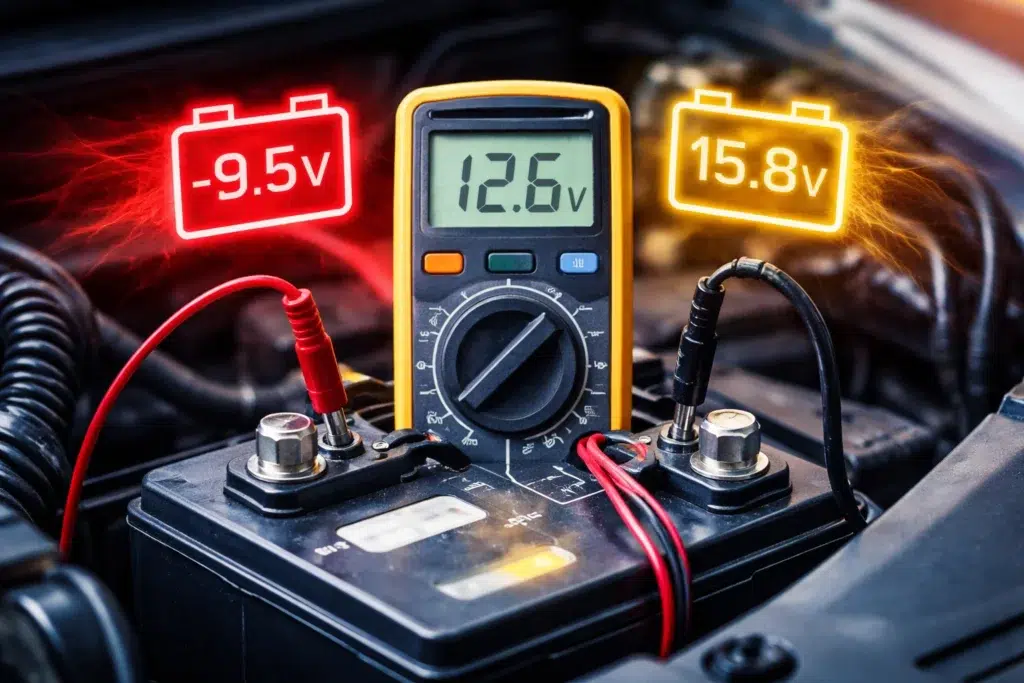
Low Battery Voltage Symptoms
Low car battery voltage causes noticeable problems, including:
- Hard or slow engine starts
- Dim headlights
- Dashboard warning lights
- Sensor and ECU malfunctions
In some cases, low voltage may even contribute to strange drivability complaints such as pressing the gas but car won’t accelerate properly.
High Battery Voltage Symptoms
Too much voltage is just as dangerous.
Signs of high automotive battery voltage include:
- Battery overheating
- Burnt smell
- Bulbs blowing frequently
- Damaged control modules
This often indicates alternator or voltage regulator failure.
Does Battery Voltage Differ by Vehicle Type?
Car Battery Voltage in Hybrid Vehicles
Hybrid cars still rely on:
- A 12V car battery for electronics
- A separate high-voltage traction battery
Some modern hybrids also use 48V systems, but the normal auto battery voltage for accessories remains 12V.
Car Battery Voltage in Electric Vehicles (EVs)
EVs operate with:
- High-voltage packs (200–800 volts)
- A traditional 12 volt battery for lights, locks, and computers
A DC-DC converter maintains normal vehicle battery voltage even without an alternator.
Why Car Battery Voltage Is Important
Maintaining the correct car battery voltage is critical because it affects:
- Engine starting reliability
- Electronic stability systems
- Safety features like airbags and ABS
- Charging system health
Low or unstable voltage often explains problems such as a car heater not working, especially during winter months.
What Factors Affect Car Battery Voltage?
Battery Age & Condition
Most batteries last 3–5 years. As they age, average battery voltage drops faster under load.
Hot vs Cold Weather
Cold reduces available voltage; heat shortens battery lifespan.
Short Trips vs Long Drives
Short trips don’t allow the alternator to fully recharge the battery.
Electrical Accessories
Aftermarket lights, sound systems, and chargers increase the voltage demand.
Alternator Health
A weak alternator cannot maintain normal voltage on car battery.
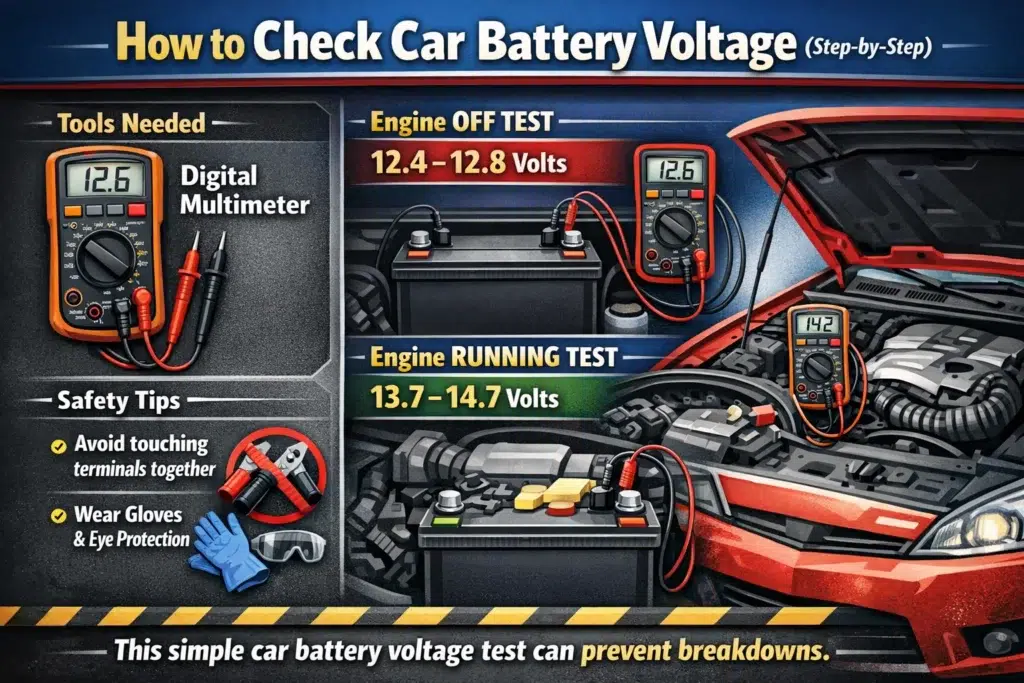
How to Check Car Battery Voltage (Step-by-Step)
Tools Needed
- Digital multimeter
Engine Off Test
- Reading should be 12.4–12.8 volts
Engine Running Test
- Reading should be 13.7–14.7 volts
Safety Tips
- Avoid touching terminals together
- Wear gloves and eye protection
This simple car battery voltage test can prevent breakdowns.
What to Do If Your Car Battery Voltage Is Low
- Recharge if voltage is slightly low
- Jump-start if the battery is drained
- Replace if it won’t hold charge
A new battery usually shows new car battery voltage around 12.6–12.8 volts out of the box.
Frequently Asked Questions (FAQ)
How many volts is a car battery normally?
A normal car battery voltage is about 12.6 volts when fully charged.
Is 12.2 volts OK for a car battery?
12.2V indicates a partially discharged battery and may cause a bit of starting issues.
Can a car run with low battery voltage?
Yes, but electronics may malfunction and starting becomes unreliable.
What voltage means a car battery is dead?
Below 11.8 volts usually means the battery is dead.
How long does a 12V car battery last?
Typically 3 to 5 years, depending on the usage and climate.
Does car battery voltage drop overnight?
Yes, especially in the cold weather or with parasitic drain.
Final Verdict: How Many Volts Should a Healthy Car Battery Have?
To summarize clearly:
- Standard car battery voltage: 12V
- Fully charged car battery voltage: 12.6–12.8V
- Battery voltage when car is running: 13.7–14.7V
- Minimum voltage to start a car: ~9.6V during cranking
If you maintain these voltage ranges, your battery will remain reliable, your electronics will function properly, and your car will start without trouble.
Resources
Britannica: Automobile electrical system – Authoritative explanation of the vehicle’s electrical systems, including car battery voltage, charging systems, alternators, and how electrical power is distributed in cars.
Delphi Technologies: Automotive electrical systems overview – Manufacturer-level explanation of automotive electrical systems, including car battery voltage, charging systems, alternators, sensors, and how electrical power is generated and distributed throughout the modern vehicles.
AutoZone: Car battery testing and voltage explained – Practical, step-by-step explanation of car battery voltage testing, what voltage readings exactly mean, and how to interpret low or high car battery voltage results.
Haynes Manuals: Car battery charging and voltage basics – Beginner friendly yet technical explanation of automotive battery voltage, charging ranges, the multimeter testing procedures, and normal vehicle battery voltage.
Battery University: BU-403: Charging lead-acid batteries – Highly trusted technical resource explaining lead-acid battery voltage ranges, fully charged car battery voltage, its charging limits, and the battery degradation over time.

I am Tushar Balchandani, founder of Car Info Expert and someone who has been working extensively in the car industry as a car expert for 15 years. My aim is to provide useful truthful and reliable information to the readers based on my real experiences and hands-on experience. From buying tips to maintenance guides, I help readers make confident car-related decisions.